
You have started solid foods with your infant, only to realize they don’t like some of the foods you have given them. Are you feeling frustrated with meal times – watching your infant struggle with eating, not eating enough, or refusing to eat food(s)? This post is for you!
Hi, Chelsea here! I am a pediatric speech-language pathologist (fancy name for a speech therapist) and feeding therapist. My most favorite thing to do in feeding therapy is work with infants who are learning to eat solid food. I also love educating parents on tips and tricks to help prevent picky eating. Your child does NOT have to live on mac n cheese and chicken nuggets!
This content about starting solid foods is mostly taken from my eBook. To get the full scoop on preventing picky eating, be sure to check out this ebook, available on our Teachers Pay Teachers Store.
What is solid food?
Before we dive in, I want to note that “solid food” is anything that is not breast milk or formula. That means that purees are also considered “solid food” here.
Most infants start solid foods around 6 months of age. We encourage the introduction of solid foods using real food rather than traditional baby food. Your baby is also very capable of feeding him/herself right from the beginning! The challenge *but most important aspect* with allowing your baby to feed themselves is that they are in control of what they eat and how much of it they eat.
To learn more about how and why babies should feed themselves, read this post Why Infants Don’t Need Baby Food When Starting Solid Food
But, when we let babies feed themselves, we fully trust their ability and intuition, which means we caregivers have to sit back and interpret their cues. Below I explain the importance of the correct interpretation when it comes to babies seemingly “not liking solid foods”.
Why does my baby not like solid foods?
What if my baby “doesn’t like” certain foods I serve?
Great question! This is one of the most common reports I get from parents. Many babies show, what we as adults, interpret as a negative response to foods.
What this looks like when starting solid foods:
- facial expressions
- avoiding touching or tasting the food
- eating minimal amounts (or none) of the food
- pushing the food out of her mouth
- or even gagging
While I can completely understand why an adult would interpret this as baby ‘not liking’ the food, there are also a LOT of other potential explanations to the aforementioned responses. AND, even if baby did not ‘like’ the food, we do not want to quit serving it.
What are other possible explanations to the negative responses?
Food is a whole new experience for your baby. She has never seen, smelt, touched, or tasted anything like this before. Think of something that is brand new to you – this could be a food or an unrelated experience- and think about how you learn about it. Do you typically dive right in? Maybe. But more than likely, you are hesitant and kind of ‘dip your toes’ first. She is learning to eat- she is not an expert yet!
If baby does not eat a lot of the food, avoids interaction with it, throws it on the floor, or even spits it out, it is OK. She may not be ready to learn about the food today, she may not have the motor skills needed to appropriately grasp the food or take it to her mouth, or she may be really experimenting with other cognitive skills developing at this time- object permanence and cause and effect. She may throw it all off the chair just to see if it still exists or to see what happens when it hits the floor (e.g. the sound it makes, the splatter, or your reaction).
Gagging vs. Choking
Gagging on food could be a negative response to the taste or texture, however, it is more likely a protective response to ejecting food that has gotten “too far back” into the mouth. This is DIFFERENT than choking.
Gagging is actually a reflex designed to help prevent choking. When food that is not ready to be swallowed hits the back of the mouth, a gag is elicited to prevent it from going any further and ejects it out. This keeps baby safe! Choking is when the airway is blocked and your baby cannot breathe. This requires immediate attention!
What if my baby gags?
Stay calm and encourage her. Remind yourself that it is normal and protective. This can be hard for parents.
What if my baby chokes?
Stay calm and respond as you have learned in CPR training. I highly recommend CPR training for all feeders before your baby starts eating.
What do we do about continued negative responses when starting solid foods?
Do NOT stop serving the food. Our taste buds change often and babies and children can take multiple repeated exposures to foods to decide if they ‘like it’ or not.
Change your language
Most parents do not realize it, but we tend to put labels on our children and things in their environment. When we label things, that sticks in children’s “black and white” minds. So, once we label a specific food as “don’t like”, it often remains in that category.
One time your child spit eggs out, you said “you don’t like eggs”, you stopped serving eggs because she “didn’t like them”, and when dad tried serving them you told him “she doesn’t like eggs”. Now, you will no longer offer eggs and her exposure to them will be minimal otherwise, thus removing her exposure to and experience with eggs, i.e. her learning opportunities to “learn to like them”. Then, randomly, you will offer eggs, and they will be new and unfamiliar, and she won’t want them. Confirmed. She “does not like them”. Put this cycle on repeat and you now have a “picky eater”…. which they will then live up to as well, because of your response to their “picky eating” and them hearing you tell different people that they are so.
Now, the above paragraph sounds harsh and blaming parents. That is not our intention. Keep Reading. We want to educate and empower you to do better. Because we know, when you know better you do better. All of the parents we have encountered who end up in the cycle described above are well-intentioned. They did not set out to create a picky eater. They were being responsive parents – they thought their child truly did not like the food. So, they were not going to serve something they didn’t like! Why waste the food (and their time)?
When we keep our language around food neutral, the outcome is much better. Take “they don’t like it” and turn it into “they are learning to like it”. This more positive approach helps prevent limiting what we offer baby and will elicit a more positive response from baby to the foods.
Change your presentation
Offer the food in different ways- sauces, seasonings, and presentation changes can make a huge difference.
Change your perspective
Remind yourself that you do not like certain foods all the time. Maybe you have burnt your baby out on serving it too often or too often in the same manner. Try taking a break from the food and reintroducing it a week or two later. Offer it at a different meal or paired with different foods.
Evaluate your response. Maybe your baby is feeding off of some message you are sending her. Are you being too pushy, overly encouraging a certain food, or are you responding negatively to her lack of eating this food? Stop this negative response train before it gets too much momentum!
When to seek professional guidance
If the “picky eating” seems persistent after all of the above tips or is persistent across a lot of different foods you should consult your child’s medical professional(s) to further discuss concerns. Your child may benefit from further medical examination or intervention, and/or referral to feeding therapy (speech and/or occupational therapy) to rule in/out sensory and/or motor impairments contributing to her eating challenges.
Want to learn more about starting solid foods?
If you want to learn more, I have a free 5 day email course that goes in-depth on starting solid foods with infants.
Also, watch out for my eBook when it is officially published. It walks you through, step by step, on how to help your baby start off on the right path to becoming a very successful eater.
References:
Starting Solid Foods eBook. Three Roads Therapy LLC. Publication pending.
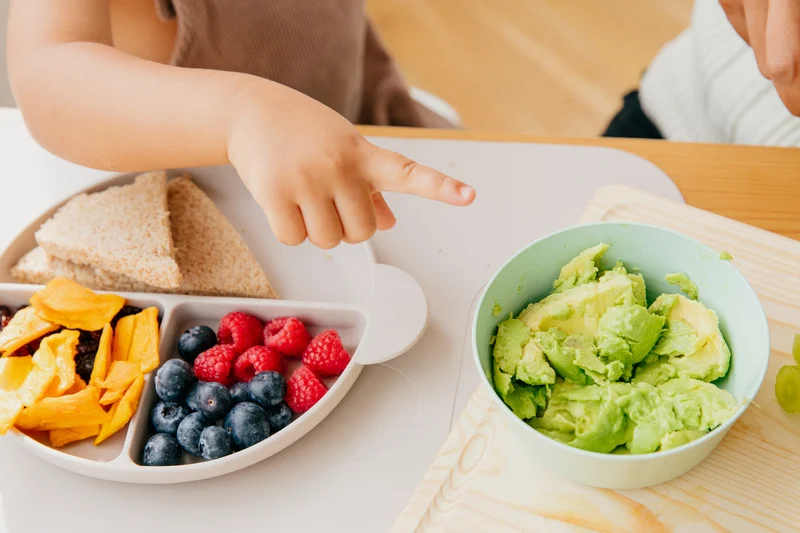
Photo taken from Canva and not an original image from Three Roads Therapy LLC.
Information Disclaimer:
The content, images, materials, and information provided on this website is only intended to be general summary information to the public. It is not intended to take the place of either the written law or regulations. It should not be viewed as medical, financial, legal, or professional advice of any sort. We will do our best to confirm the accuracy of all information that appears on our website but cannot guarantee accuracy, reliability, or timeliness. All recommendations are made without guarantee or warranty. We make no representations or warranties of any kind, express or implied, about the completeness, accuracy, reliability, suitability or availability with respect to the website or the information, products, services, or related graphics contained on the website for any purpose. Any reliance you place on such information is therefore strictly at your own risk.
We cannot predict and do not guarantee that you will attain a particular result from the information provided in or through this website, and you accept and understand that results differ for each individual. Each individual’s results depend on his or her unique background, traits, dedication, desire, motivation, resources, actions, and many other factors. You fully agree that there are no guarantees as to the specific outcome or results that you can expect from using the information you receive on or through this website.