
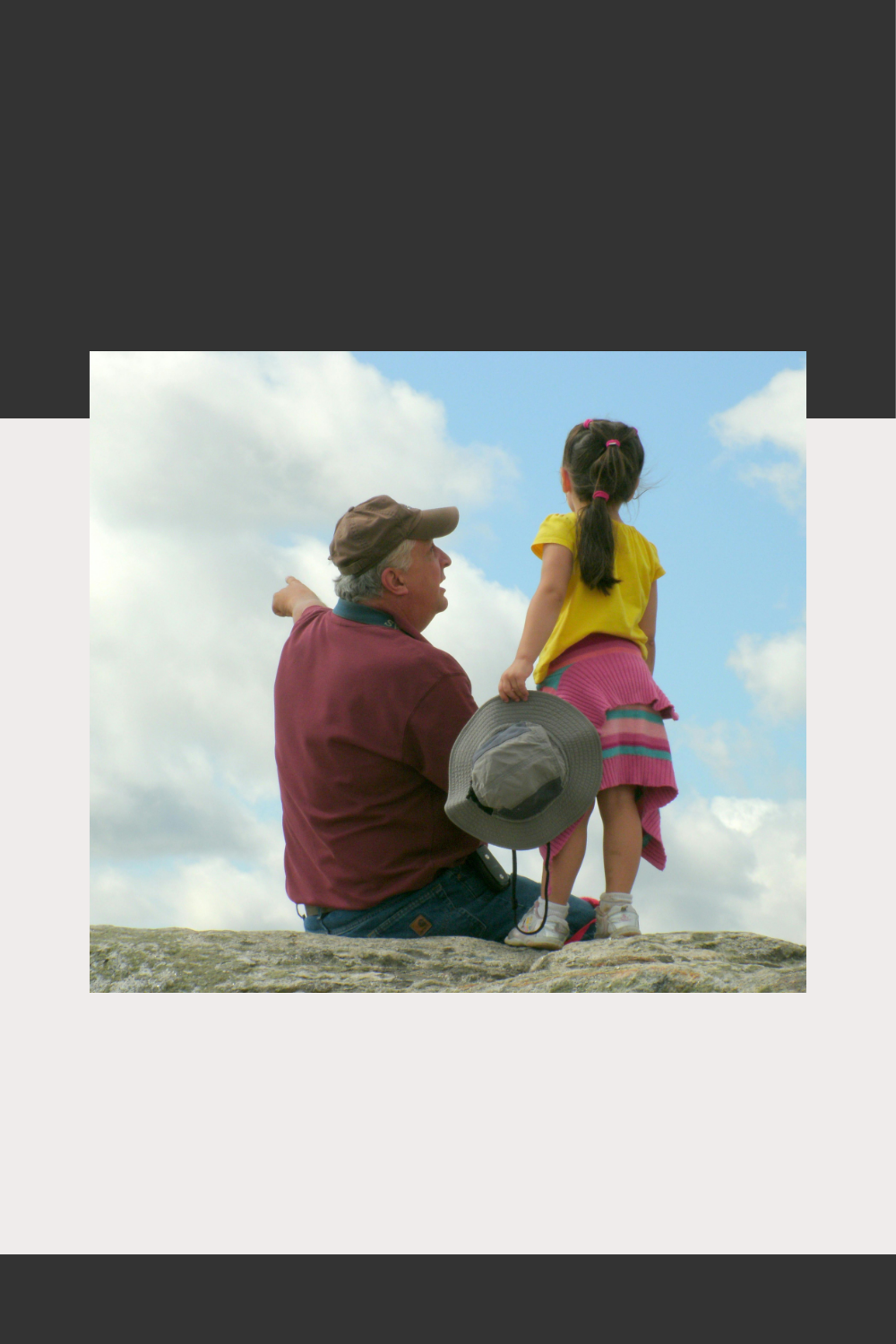
Narrating. Probably not a word you say on a regular basis, but… you are walking through the store describing to your child – the aisle you are in, the foods on your list, and what you are going to be making that week. Or you are driving down the road describing – the water tower up ahead, the stores you are passing, and where you are going today. You might not know it, but this is a very successful strategy for language development called Narrating.
Three Roads Therapy LLC is an Amazon Affiliate. This post may contain Affiliate links. If you make a purchase from the links provided, we may earn a small commission, at no additional charge to you. Please read our full Affiliate Disclosure statement.
Hi, Chelsea here! I am a pediatric speech-language pathologist (fancy name for a speech therapist). I have been working with young children who are learning to talk since 2015, and I LOVE this topic!
For many people, this can be unnatural at first, so I give specific examples here to help you along. Some of the content is taken directly from the soon to be published ebook. If you want even more information on narrating, and other strategies to help young children develop their language skills, watch for the ebook to launch!
What is Narrating
Narrating = Describing. Tell your child what you’re doing and why you’re doing it. Name things you see and the actions in the world. Talk, talk, talk!!!
There are a lot of different strategies we can use to help children develop language skills. Whether it be an infant going through the pre-verbal phase of language or an older child learning new vocabulary and complex sentence structures, narrating is a great strategy to accomplish this!
Some other terms people use instead of narrating include modeling, self-talk, or parallel talk. We use narrating, here though, because we are really just wanting to demonstrate how and why we use language throughout the day. While any of these terms could technically be correct to describe what we discuss here, modeling can be thought of as prompting and both self and parallel talk depend on the person’s perspective we are talking from. Therefore, we will stick with narrating.
How Do I Do It
For infants, start with simple, repeated daily tasks and describe what you’re doing. Try to use short, simple descriptions using a “parentese” (inflection, sing-song, and/or engaging tone of voice) but don’t feel the need to “baby talk” (using incorrect sounds or word structures, such as ‘me want a snack’ or ‘I wuv you’).
Have an infant? Check out Why Infants Don’t Need Baby Food When Starting Solid Food or Feeding Gear for Starting Solid Food: Speech Therapist Approved to learn more about supporting successful eating habits from the start!
Narrating Example for Infants
Activity: Dressing
“It’s time to get dressed!”
“First we put your shirt on…. One arm, two arms!”
“Next your pants…. Where’s your leg?…. Peek-a-boo leg”
“Last your socks”
“Now we’re all done”
For toddlers and preschoolers, continue using an interesting tone of voice, but increase the complexity, length, and variability of vocabulary and sentence types. Utilize it in familiar routines but also try to expand it to different contexts to help your child learn from the experiences he or she is having.
Have a toddler? Check out 7 Tips for Reading With Children or our Book List for 0-4 year old children to learn more!
Narrating Example for Toddlers
Activity: Zoo Trip
“We are at the zoo! What do you think we will see here today?”
“First, we have to get in line to buy our tickets, then we can go in.”
“We have the choice to go right, to the Monkeys, or left, to the water animals…”
When you come to the monkeys… “I see two big Monkeys and 4 babies. I bet the bigger ones are the mom and dad”.
For older children, continue talking through different activities, especially those that are new, as a chance to teach new vocabulary.
Narrating Example for School Age Children
Activity: First Time Playing Uno Card Game
After explaining the rules… “I will go first. I have a blue ‘skip’, so that means we skip you and go to your sister.”
“Oh no, she didn’t have a blue card, she had to draw.”
“My turn again. I have a blue ‘draw 2’ I’m going to play. You have to draw 2 cards.”
Why Do We Want to Narrate
Think about how children learn- by seeing and hearing what others around them do. You, as parents, are your child’s first teacher and you have a significant impact on what your child learns. The communication style we model, words and sentence types we use, and even the tone of voice are all part of the way we communicate. Whether it be verbally or nonverbally communicated, children pick up on it.
We want to use children’s canny ability to learn by observation to our advantage! All you have to do is talk! You don’t have to plan or prepare any sort of diy craft, sensory bin, or twirl flaming batons. You just have to describe what is happening in your world. Easy enough, right?!
When children hear you talking, they pick up on the vocabulary and start to understand it within the context. This natural learning is the best way for them to integrate information into their schemas (e.g. pictures in their brains). Once they have it stored there, they can start to use it. Then voila! They have new words in their vocabulary.
When you vary your sentence structures, they hear questions, answers, short simple phrases, and long complex phrases. They see and hear tone of voice, sarcasm, jokes, and read body language. These skills are much much harder to explicitly teach, so learning them in context is the best way!
Quality Over Quantity
While I say in the beginning “talk talk talk”, I do want to add a note that good quality narrating is better than a large quantity of narrating. Here is a list of a few “don’ts” to consider:
- Don’t use baby talk: inappropriate grammar or mispronounced words “me want __”
- Don’t use excessively detailed descriptions. Try to provide an appropriate level of detail according to your child’s age, but keep in mind when we over-talk, children likely quit listening or do not understand.
- Don’t talk to your child about things that are not appropriate for them to hear: children are children not our friends. They don’t need to hear adult content.
- Don’t talk to your child if they are actively involved in something that requires their attention. We want to foster their attention span as well as show social appropriateness through our interactions.
Give it a go! You might feel silly at first, but I promise you are helping your child learn. Feel free to share any questions or comments with us.
References
Language Acquisition ebook. Three Roads Therapy LLC. Publication Pending.
Cover Graphic: Not original images from Three Roads Therapy LLC; retrieved from Canva: Susan Bickford from Pexels
Pintrest Images: Not original images from Three Roads Therapy LLC; retrieved from Canva: Susan Bickford from Pexels, Kampus Production from Pexels, Aflo Images, Vlada Karpovich from Pexels.
Information Disclaimer
The content, images, materials, and information provided on this website is only intended to be general summary information to the public. It is not intended to take the place of either the written law or regulations. It should not be viewed as medical, financial, legal, or professional advice of any sort. We will do our best to confirm the accuracy of all information that appears on our website but cannot guarantee accuracy, reliability, or timeliness. All recommendations are made without guarantee or warranty. We make no representations or warranties of any kind, express or implied, about the completeness, accuracy, reliability, suitability or availability with respect to the website or the information, products, services, or related graphics contained on the website for any purpose. Any reliance you place on such information is therefore strictly at your own risk.
We cannot predict and do not guarantee that you will attain a particular result from the information provided in or through this website, and you accept and understand that results differ for each individual. Each individual’s results depend on his or her unique background, traits, dedication, desire, motivation, resources, actions, and many other factors. You fully agree that there are no guarantees as to the specific outcome or results that you can expect from using the information you receive on or through this website.