
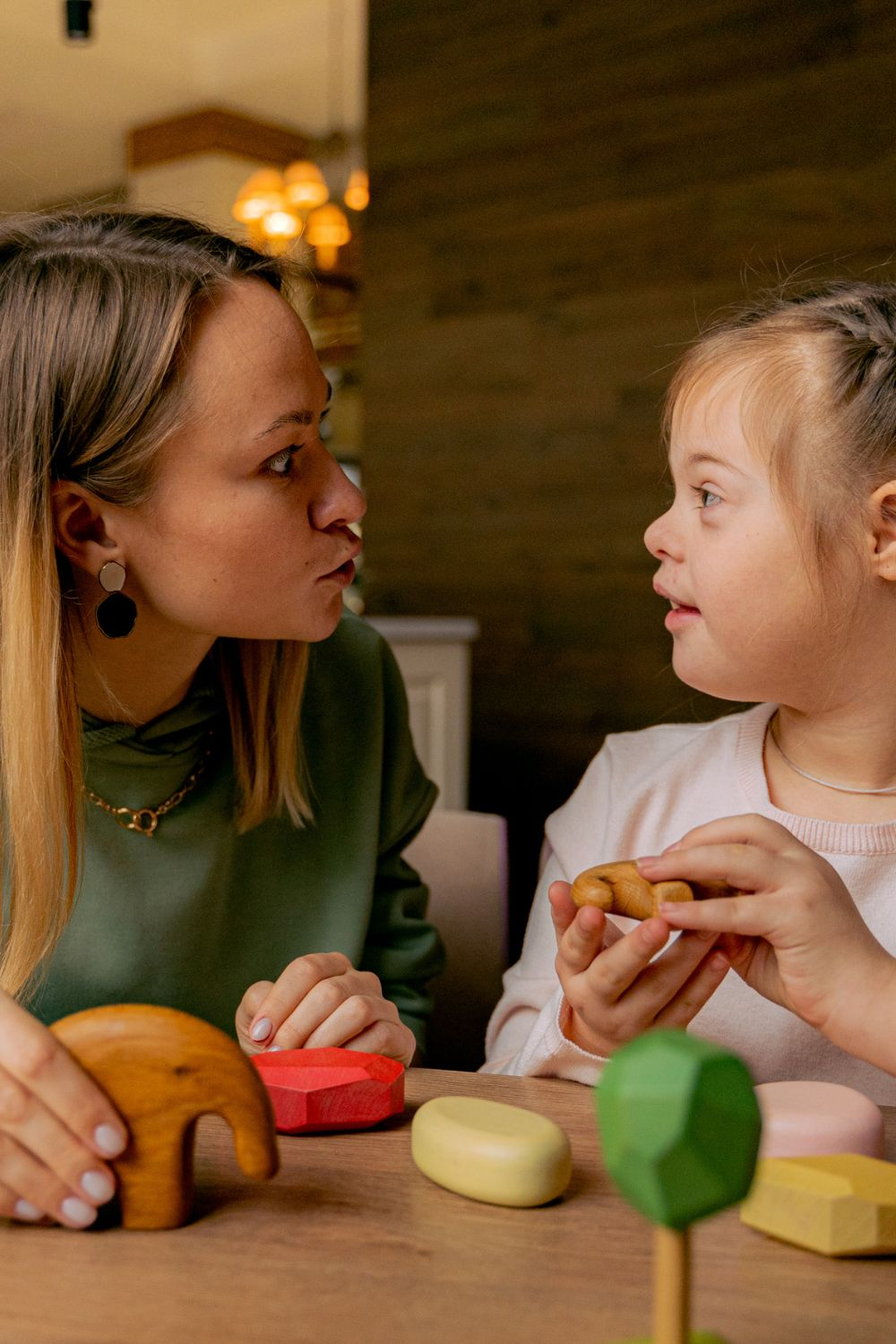
You have determined your child needs Speech Therapy, you completed your Speech Therapy Evaluation, and now you are going to start therapy sessions. You might be thinking … What might this look like? Will I be involved in the sessions? What is my role during the sessions?
Hi, Chelsea here! I have been a pediatric speech-language pathologist since 2015. I have worked in multiple different settings and I have met many parents who are scared or overwhelmed with starting speech therapy. I am here to answer some common questions and help you feel prepared to attend your child’s speech therapy sessions!
This post contains Affiliate Links. If you make a purchase using the links, we may earn a small commission, with no additional charge to you. Please read our full Affiliate Disclosures
Part 1 & 2 Recap
This is a multi-part blog series. I highly recommend you go back and read both of these, as there is valuable information in each. However, I will provide a quick overview here:
WHs of Speech Therapy: Who, What, When, Where, and Why
You or someone you know, including your child’s healthcare provider, may see a need for your child to have speech therapy.
Your child may struggle with language development, speech sounds, oral strength, feeding difficulties, vocabulary, grammar, social skills, academic reading or writing, executive functions (e.g. planning, organizing, attention), dysfluent speech, voicing concerns, and more.
There are several factors to consider when choosing speech therapy. Depending on your child’s age, the cost and coverage of therapy, your schedule, and the areas of need or specialty, you may choose to have speech therapy through Early Intervention, the School System, Outpatient Setting (e.g. hospital, private clinic, in-home clinic or university clinic), or through a Private Practice (e.g. virtual or in-home).
What to Expect at a Speech Therapy Evaluation
Before a child can start speech therapy, there is some form of an initial evaluation. Prior to or during this evaluation, you will be required to complete paperwork and/or answer questions.
This will include legal forms, demographic information, and case history information. A common case history will ask for details regarding your child’s medical, social, socioeconomic, educational, cultural, and linguistic background and current status.
After this, your child will engage with the therapist for informal observation, informal assessment, and standardized assessment. Once this information is completed, you will engage with the therapist to determine appropriate recommendations and a plan.
Therapy Recommendations and Plan
After the initial evaluation is completed, you and your therapist will discuss recommendations and a plan. As I discussed in What to Expect at a Speech Therapy Evaluation your therapist may recommend things directly related to speech therapy but they may also recommend additional services.
Why might the SLP recommend additional services
It is very common for children with speech and language or feeding difficulties to also have co-existing difficulties, such as motor or sensory. Oftentimes speech is the first service that is recommended because it tends to be the more obvious area – maybe the child is not yet talking, does not talk clearly, or cannot maintain conversations.
SLPs are trained in screening and observing other areas of deficit. These may include, but are not limited to, motor delays, such as poor core strength or difficulty transitioning from standing to sitting. Or sensory challenges, such as avoidance of messy activities or the need for deep pressure in order to focus.
Other areas that an SLP may recommend that a parent follow up on include a hearing screening/evaluation. You may remember from our previous series on articulation 6 Reasons You Cannot Understand Your Child When They Talk that hearing is a major contributor to speech and language skills, and can be an easy thing to rule in or out.
Autism Spectrum Disorder testing will be recommended if your child is showing signs of ASD and you have not yet started the process for this.
Swallow studies are commonly recommended for feeding therapy. Tongue tie assessments and possible revisions are also common contributors to oral and speech deficits.
What if I disagree with a recommendation
While there may be many more recommendations following an initial evaluation, these are many of the common ones. If you do not understand a recommendation, why it may be important, or if you disagree with a recommendation, it is important that you discuss this with your child’s SLP.
I have found that many parents will go along with recommendations to appease the professional and I think it is important that the recommendations align with your values as a family. I will say, however, that if an SLP feels strongly about something and you cannot come to an agreement as a team, the SLP may decide to discontinue services or change the treatment plan accordingly.
This is not a bad thing. Professionals can have strong opinions but it is most important to do what you feel is best for your child. In this instance, you may have the opportunity to seek another therapist or choose a different therapy setting.
Therapy Plan
No matter the setting, you should be directly involved in determining the plan for therapy. This may include the recommendations, as discussed above, but it will also include the frequency of therapy and the goals.
Frequency
The frequency of therapy will vary greatly between settings, but the most common recommendation is 1x/week sessions to ensure consistency. This may work well for you and your family, but it may not, depending on your schedule and the cost of services. Every other week, once a month, or even consultation as needed are additional service frequencies that may work.
Many children benefit from short “bursts” of therapy (e.g. summer therapy) or even short intensive programs. Some disorders, such as Childhood Apraxia of Speech, have shown a positive response to short, frequent sessions, such as 15 minutes multiple times per week.
Or if your child has multiple disorders, it may be appropriate to spend one day treating language deficits and one day treating oral skills and feeding deficits. All of these would be considered typical therapy recommendations, and you and your SLP will collaboratively decide what is best.
Goals
Your therapist will likely have an idea after the initial evaluation of what deficits your child may have. Through a discussion of these areas, you can share your values and your goals as they fit into the context of your family. From there, you and the SLP can set a few long term and short term goals.
If your child has multiple different areas of need, it is important that you share the areas that are most important to you and/or if you do not have the capacity to address certain areas at the specific time, you should share that too.
For example, if your child has significant behavior challenges related to not being able to communicate effectively and also has mild picky eating, you may ask that the initial therapy sessions address language skills first before the picky eating.
It is important that you as the parent have an understanding of the goals and know what techniques the therapist plans to use to address them. It is also important that you recognize that SLPs do not have all the answers and that dynamic assessment – ongoing assessment of how your child is responding to therapy is crucial.
Therefore, I encourage you to ask what therapeutic strategies the SLP plans to use, so that you have an understanding, but also recognize that this may change. You can ask for an explanation when it does change.
As the SLP gets to know your child, they may test out different strategies to see what the response is. Some will work. Some will not. Therapy is a lot of trial and error. And you, as the parent, are the key to guiding these decisions. You will provide observations of how your child did outside of sessions, things you tried, and their response to it to help the SLP understand and make adjustments.
Therapy Sessions
All of the prior discussed information will likely take place over the first few sessions after the initial evaluation. Dynamic assessment and your input will continue throughout the entire time your child is in therapy, so I encourage you to keep a journal or a note on your phone to jot down things as they come up. Depending on the setting and your specific therapist, the way you share this information will change. Below are more details about what a session may look like and what your role is.
What do I do during therapy sessions
This will vary depending on the setting and the specific therapist. If you are present for a therapy session, the SLP will likely go over what they expect from you, but if not, you should definitely ask.
Many therapists want to be the ones to handle behavior or other things that arise during sessions – but not diaper changes or snotty nose wipes 😉 This allows the therapist the opportunity to work through the behavior and try different techniques to educate and help you as the parent.
Want more on behavior? Behavior is Communication: Part 1 discusses common reasons why children have negative behavior. Behavior is Communication: Part 2 provides practical tips for addressing negative behaviors.
In early intervention, parents are asked to not only be present, but to also be actively involved. Home-based settings tend to be the most “hands on” with parents.
In a school setting, you will likely have minimal to no direct contact with the SLP, but you may be able to email with them or pass a notebook back and forth with notes. It would be important to have clear communication during scheduled conferences and team meetings to best understand what is happening during school sessions and to share what you have observed at home.
In an outpatient setting, some therapists will ask you to stay in the waiting room, others will have you in the therapy session, and others may have a combination approach. If you are not present, you may share information for a few minutes at the beginning or end of the session. If you are present for the session, you may have conversations with the SLP between activities with a few minutes at the beginning and/or end of the session to review.
You should ask your therapist how they would like to handle conversations and if you do not feel there is ample time, you may be able to communicate via email or on a client portal between sessions.
What does a speech therapy session look like
Like everything up to this point – a therapy session will vary greatly between therapists and settings, but I will give a basic overview of what you can expect.
The first few minutes are usually a “warm up”, where the SLP may try to engage the child, review something from previous weeks, have some free play so the SLP can observe a specific skill, or even some specific exercises.
The bulk of the session will be the specific therapy activities. For younger children, this will look like play. Because remember, Play: The Most Important Childhood Skill. For older children, this may still be play – games or toys – or it may be articulation drills, desk work, or peer interactions.
The last few minutes will be a “cool down” where the SLP may review targeted skills, discuss homework and a plan until the next session, or even some free play.
Therapy Strategies or Just Play
From a parent perspective, you may be able to pick out specific skills that the SLP is targeting, but you may not be able to. Your SLP will likely explain things to you, but they will not explain every single detail, so I encourage you to actively observe the session.
This is when you observe what they are doing and wonder why they may be doing it. Watch your child’s response and see what feedback the SLP provides.
SLPs (and other therapists) are trained observers. So, even during “free play” or a conversation with a parent, the SLP is likely observing something to see how well your child can do it without being taught or cued. This helps build independence and helps to fade cue dependence.
We are trained to Wait for Successful Language Development and as a parent that can feel difficult. You may be thinking “they know this” or “if I ask them, they can do it”. Many children need more processing time than we realize. So, if the SLP is just sitting there, let them. Trust them. You have chosen this professional for a reason. They are likely giving your child the opportunity to process.
SLPs use lots of different cueing methods as part of their therapy. This may look like choices, fill in the blank, questions, waiting, modeling, or even asking for a direct repetition. Which ones do you see in the session?
We also use feedback as part of therapeutic strategies. This may be a direct correction of an incorrect response, but it may not be. You may be thinking … “that was wrong, are they going to correct them?”.
Maybe instead of directly correcting the child, the SLP is going to model and exaggerate a correct response. Or maybe they are going to implement a social story to teach the concept. Maybe they are going to reward the effort rather than focus on correct or incorrect.
Final Notes
We have taken you through the process of identifying the need for speech therapy, referral, initial evaluation, and now the first few therapy sessions and what to expect during this time. It is important to recognize that things will vary between the settings and different therapists, but this is a general overview of what to expect.
References:
Cover photo and Pinterest images not originals from Three Roads Therapy LLC. Obtained from Canva: Antoni Shkraba from Pexels; Skitterphoto from Pexels; Karola G from Pexels; Stephan Andrews from Pexels; Yan Krukau from Pexels; Crystal Sing from corelens.
Information Disclaimer
The content, images, materials, and information provided on this website is only intended to be general summary information to the public. It is not intended to take the place of either the written law or regulations. It should not be viewed as medical, financial, legal, or professional advice of any sort. We will do our best to confirm the accuracy of all information that appears on our website but cannot guarantee accuracy, reliability, or timeliness. All recommendations are made without guarantee or warranty. We make no representations or warranties of any kind, express or implied, about the completeness, accuracy, reliability, suitability or availability with respect to the website or the information, products, services, or related graphics contained on the website for any purpose. Any reliance you place on such information is therefore strictly at your own risk.
We cannot predict and do not guarantee that you will attain a particular result from the information provided in or through this website, and you accept and understand that results differ for each individual. Each individual’s results depend on his or her unique background, traits, dedication, desire, motivation, resources, actions, and many other factors. You fully agree that there are no guarantees as to the specific outcome or results that you can expect from using the information you receive on or through this website.